Most people do not mind building work. They mind the dust in the bedding, the drilling through a shared stair wall, and the feeling that their home has become a worksite. A dedicated workshop changes that balance.
For trade and employment enquiries, see working with Sweet Homes.
Why a workshop matters more in Edinburgh flats
Edinburgh tenements and older flats amplify two pressures: close neighbours and awkward access. Sound travels through shared structures, and the stair is a shared space, not a private site. The Council’s general guidance says noisy construction should usually only disturb neighbours Monday to Saturday, 7am to 7pm, with exemptions or other restrictions possible. Read the Council’s construction-noise guidance. This is separate from Sweet Homes’ normal working hours.
The practical implication is simple. If we can shift cutting, routing, sanding, and repeated test-fitting into our workshop, we reduce the amount of time your flat is the loudest place in the stair.
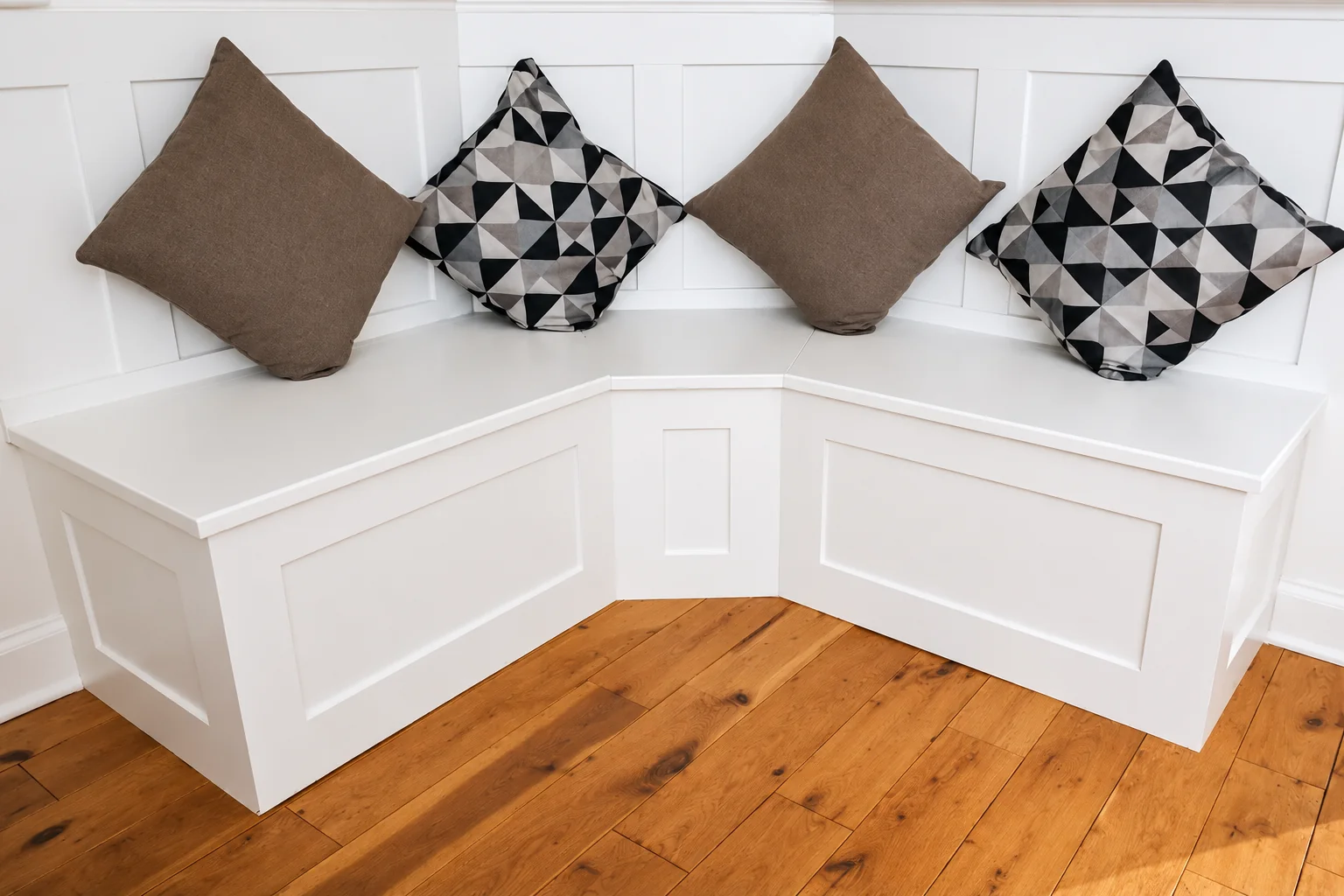
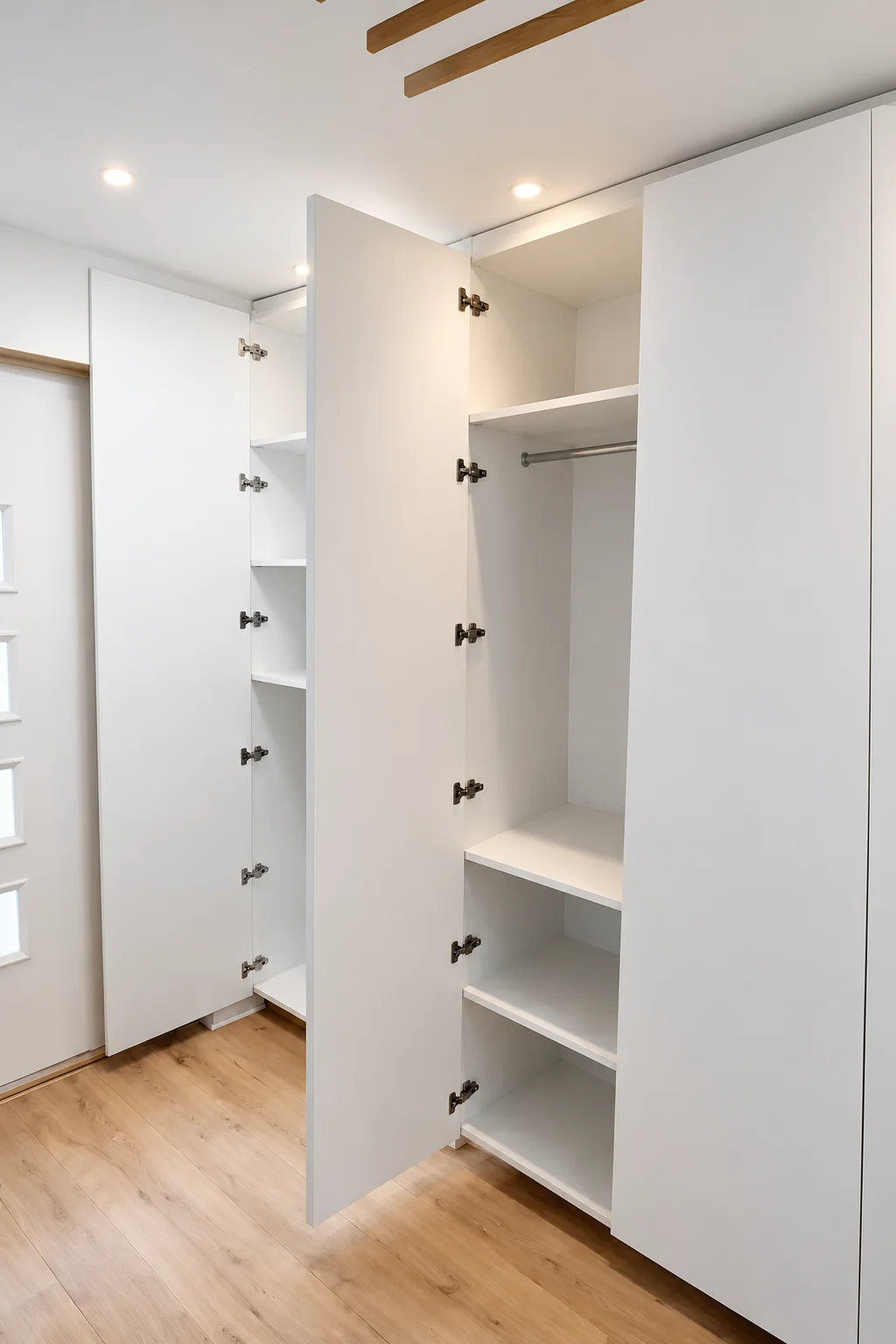
If your project includes joinery, built-in storage, or fitted furniture, our bespoke joinery in Edinburgh page shows the kinds of jobs where this approach makes the biggest difference.
What you actually gain from off-site work
Fewer return visits
Assemblies are proven in the workshop before they arrive. That means fewer “we need another visit to tweak that” moments and less wasted time on small adjustments.
Less stalled time on site
Adjustment work is done where tools and space are set up for it. Units arrive ready to install, which reduces the number of days where progress slows waiting for something to be refitted.
Less work carried out inside the home
Less dust migration through the flat and less repeated noise. This matters more than people expect when they are living at home during works, especially through the weekend.
Fewer installation surprises
Joints and clearances are checked when it is easy to correct. The workshop does not guarantee a perfect outcome in every building, but it reduces the number of avoidable problems.
How the workshop-first workflow runs
Off-site preparation
Cutting sheet materials and timber to size, routing grooves and connector pockets, sanding and surface prep that creates fine dust, and dry-runs of units so we know they assemble cleanly. Moving cutting and sanding off-site can reduce dusty work in the home. It still needs suitable controls in the workshop and on site. HSE guidance on cutting and sanding wood covers prevention, dedicated work areas and control measures.
Test assembly in the workshop
We build and assemble the unit dry, then check doors, reveals, alignment, and how the whole thing pulls together. We use Lamello connectors where appropriate: these are designed for secure, nearly invisible connections that can be disassembled and retightened. The result is an assembly that has been proven before it leaves the workshop.
Transport and access planning
We disassemble for transport, which matters on narrow tenement stairs and tight landings. Connectors make this practical in a way that glued-up assemblies are not. Access is planned before materials arrive, not improvised on the day.
On-site installation with fewer unknowns
We reassemble on site with fewer cutting steps and fewer unknowns. Final scribing and adjustment can still be needed in older Edinburgh flats where walls and floors are out of level, but the avoidable problems have been dealt with in the workshop.
Common misconceptions about workshop joinery
Not automatically. Existing Edinburgh buildings vary, and older construction means walls and floors are often out of true. Workshop build reduces avoidable errors, but final scribing and adjustment can still be needed on site. Workshop preparation can reduce avoidable problems; it does not eliminate the ones caused by the building itself.
No. Systems like Lamello’s P-System are designed specifically for efficient, secure assembly and disassembly through manufacturing, transport, and installation. Connectors can be a professional tool for predictable assembly, especially when you need to transport units through tight stairs and reassemble them cleanly.
Dust needs a plan. HSE guidance explains how suitable on-tool extraction and other task-specific controls reduce exposure. Off-site preparation, extraction and careful protection can reduce spread through the home; moving work does not remove the need to control the dust where it is produced.
Ask them to explain what will be built off-site and what must be done in your home. A workshop-first firm can still run a chaotic site, so behaviours matter more than slogans. They should talk about access early, have a specific plan for dust control rather than a vacuum at the end, and be able to explain how materials will move through your stair.
To understand the team and its responsibilities, read about how Sweet Homes works.
Related services in Edinburgh
Tenement renovations Edinburgh
Flat renovations Edinburgh
Home renovations Edinburgh
Want a calmer renovation?
If you are considering joinery, fitted wardrobes and other storage, or a room refurbishment and want to understand what could be built off-site for your home, get in touch. We will tell you honestly what the workshop changes and what it does not.
The short enquiry form covers the property, location and the work you are considering. Send your enquiry by form or email. We will reply and arrange a follow-up call to talk through the project.